Topics and framework of the survey
The EURADRIA project carried out a survey to assess how companies and workers in the construction industry are responding to the policy directions set out by the European Green Deal. The survey included 39 companies (19 Italian and 20 Slovenian), 31 workers (28 Italian and 3 Slovenian), and 4 Contracting Authorities based in Friuli Venezia Giulia.
The analysis focused on the following key topics: Green Transition awareness, company expertise, female employment, new jobs, workers’ training, work organisation, Green Transition governance, and occupational health and safety.
Main results of the comparison between Friuli Venezia Giulia and Slovenia
The comparison between the companies in the two countries shows the following common strengths:
- High overall awareness of environmental issues
- Established recycling and reuse practices
- Willingness to invest in training
- Openness to social dialogue on innovation
- Recognition of the importance of design
By contrast, the main key challenges are the following:
- Gap between awareness and concrete action
- Widespread lack of specialised roles
- Dependence on public funding
- Limited impact on work organisation
- Marginal progress on gender equality
- Low perception of impacts on health and safety
Some data on Friuli Venezia Giulia and Slovenia
The survey revealed a significant finding: awareness is not matched by an equivalent level of information. In Italy, 95% of the companies interviewed reported that they feel either fairly or highly aware of the Green Transition. However, when asked about their actual level of information, one third of the sample stated that they are not very well informed. In Slovenia, the picture appears more fragmented: 65% of companies report being aware, while 75% say they are informed, thus reversing the trend observed in Italy.
The gap between awareness and action is even more striking: only 21% of Italian companies report that the Green Transition has had a significant impact over the past three years. The figure rises to 45% in Slovenia but remains relatively limited.
Around three quarters of the companies surveyed in both countries (73.7% in Italy, 75% in Slovenia) reported lacking in-house expertise related to the Green Transition. When asked which roles are most needed, respondents in both countries predominantly point to skilled labourers, while sustainability professionals and circular economy specialists are in lower demand. This suggests that companies still rely on a traditional approach to structuring their workforce.
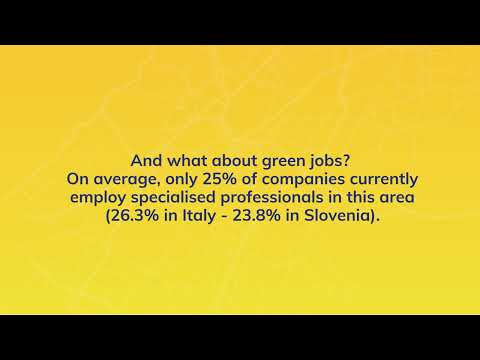
Despite a clear awareness of the importance of the Green Transition, the sector remains largely stagnant in terms of employment. Over the past three years, 84.4% of Italian companies report not having hired any roles related to the Green Transition, compared with 55% of Slovenian companies. Looking ahead, expectations remain cautious: only 10.5% of Italian companies and 40% of Slovenian companies plan to replace turnover with positions requiring Green Transition-related skills.
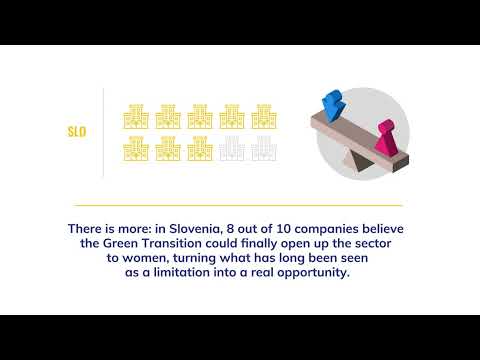
The clearest difference between the two samples concerns female employment. 80% of Slovenian companies believe that the new skills demanded by the Green Transition could draw more women into the construction sector, compared with just 36.8% of Italian companies. However, this optimistic attitude is not reflected in hiring plans: only 35% of Slovenian companies and 26.3% of Italian companies think hiring women over the next three years.
The survey also included four Contracting Authorities from Friuli Venezia Giulia, revealing that their role in the Green Transition is still quite limited. All those interviewed noted that over the past three years, the ecological transition has had very limited impact on tender specifications. The lowest-price criterion and the objectives of the Green Transition are poorly aligned, with technically superior proposals being prioritised only when explicitly mandated by law.
Results and proposals
Based on the results obtained, the EURADRIA project has proposed several guidelines for future action in the cross-border area:
- Strengthen information and training
- Promote the integration of new professional profiles
- Support female employment and develop targeted initiatives on the Green Transition to attract women to the construction sector
- Harmonise procurement systems
- Stabilise incentive mechanisms
- Strengthen social dialogue.
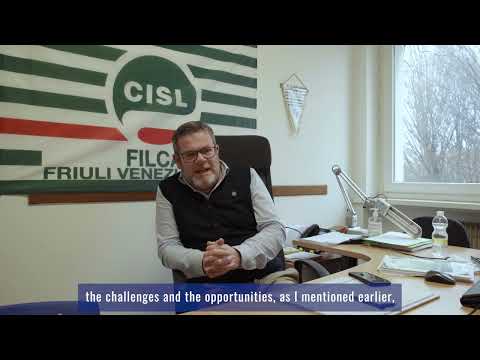
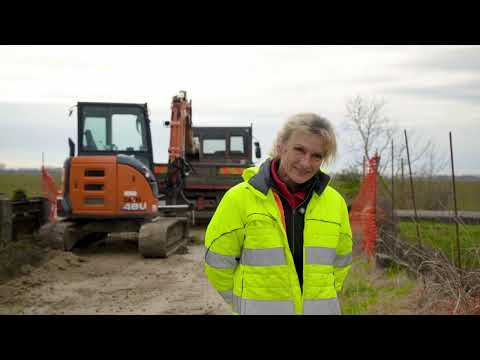
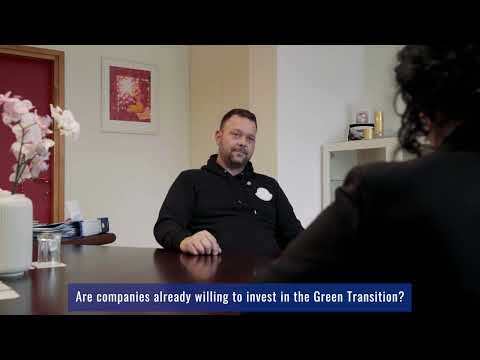
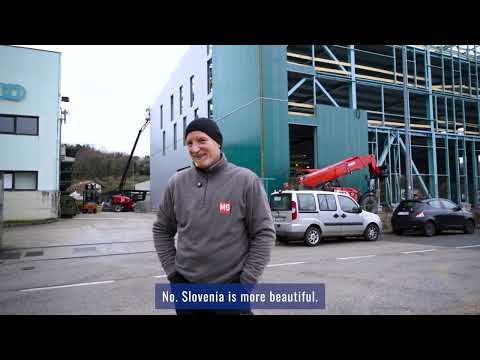
Eight multilingual videos are also available to further explore the topics covered in the survey.